Friday, May 9, 2014

Logic of English Review

Logic of English Review

Logic of English is a great learning resource that we are very fortunate to review! We received Foundations A, which came with Reusable Resources and Doodling Dragons: An ABC Book of Sounds. We chose the Manuscript sets. We also had the opportunity to review the Doodling Dragons App, which is a fantastic app that is great for toddlers and preschoolers!

Logic of English Review
Logic of English is a language arts program for schools and homeschools, and is especially great for struggling readers and foreign language students of any age learning English. They offer many products, such as Essentials, which is a systematic approach to reading, spelling, writing, and grammar and is curriculum for children ages 7+. The Rhythm of Handwriting is a handwriting curriculum in cursive and manuscript for ages 4 to adult. Foundations which is a multi-sensory approach to teaching reading and writing and is comprised of parts A, B, C and D (D is coming soon) for children ages 4 to 7. A teaches basic phonemic awareness to short-vowel sounds. B teaches short sentences, long vowels, schwa sounds and multi-letter phonograms. C teaches paragraphs, new spelling rules and phonograms, and multi-syllable words. D will teach the mastery of phonograms and reading children's books when it is released.

Foundations A costs $38 for the Teacher's Manual and $18 for the Student Handbook and covers 40 lessons. You can choose between the printed copy and the PDF version, but the price is the same. A classroom set is also available. Doodling Dragons: An ABC Book of Sounds costs $15 and the App costs $4.99.

The Teacher's Manual is extremely thorough and gives you a step-by-step guide to teach each lesson. There are lots of helpful suggestions on ways to introduce the lesson to students who learn better with different learning styles. Many lessons suggest having a Dr. Seuss book on hand, which immediately draws my kids over every time. They also suggest different materials, ranging from toys to food to sensory materials like shaving cream. Each lesson lists which (optional) materials to have on hand for the lesson, so I usually have the kids help me gather the materials. They love helping out with little tasks like this and are interested in what the materials will be used for in their lesson. The lessons are hands-on and interesting. Some of the lessons only take an afternoon and others we have spread out over the course of two to three days. We have modeled many of our sensory bins and other sensory activities to be related to their lesson of the day.

I also really appreciate that there is a heavy focus on mastery for each lesson, instead of moving on without the student being ready to. That is why we take our time with each lesson and during the review period revisit each of the previous lessons to see if they need to be refreshed. We typically take a day or two to work on reviewing the previous lessons and once they are ready we move on. The activities thus far have not been too hard for them, but I believe that's because they are more comfortable with the materials after having been exposed to these kinds of activities for most of their life. We aim to use these lessons on a daily basis with one lesson-free day per week (usually in-between lessons).

Logic of English Foundations A was the perfect starting point for my son and has been extremely effective in his lessons. Before he could name every letter and recognize a few short words, and now he can read more than a dozen words. My daughter is especially fond of these lessons as they usually involve some kind of sensory activity. Many lessons also address some form of fine motor play. Each page from the student handbook is removeable and we used them in dry-erase sleeves, so that they could be reused again. The lesson only take up a few pages and once they are removed from the book we keep them organized in a folder.

We keep sensory bins and Dr. Seuss books on hand for each activity because while my daughter is perfectly happy to begin the writing process, my son is less thrilled by the idea. He enjoys exploring the sensory activity I have set up while she works on the lesson plan and then he joins us for the reading part when she's finished writing. And that's just fine, because when he is ready to begin writing, he will have had plenty of fine motor practice!

Here's the first Reader that is included in the Student Handbook! While we have not reached this lesson yet, my children were quite eager to make their little book and we now keep it next to their Logic of English activities corner. We only created the book ahead of schedule because my children were able to read each of the words in the book. We wouldn't do the same for the other Readers because they aren't at that level yet. The Teacher's Manual says that you can draw the pictures instead if the student wishes, but my kids really liked the pictures that were provided, so that's what we used. I removed the pages carefully and folded the book pages (not stapled, so we can leave the pages out to dry before assembling). I cut out the pictures as well, which is something I'd normally let the kids do, but they did not want to at the time.


They sat next to each other and worked on the word on their page.


They were so proud of their completed book!


Logic of English Review
The Foundations Reusable Resources comes with a whiteboard, basic phonogram flash cards, handwriting tactile cards, phonogram game cards (you'll need a minimum of two decks for these games, the bookface set and the writing style you are teaching, either cursive or manuscript), and a Rhythm of Handwriting quick reference chart. While they may look like a small pile, they are used in so many lessons and many times outside of the lessons.


The star of the Reusable Resources was the Tactile Cards set! My children cannot get enough of these cards and they are the first thing they ask for when we start our activities. We pull out the cards needed for each lesson and before we even get started they feel along the lines and curves and I ask them to explain how the letter, number or strokes feel to them. Bean will usually say something along the lines of, "the curve went all the way around like this" waving her arms in a similar fashion to the curve or she will point at her ankle and raise her finger all the way up to her hips and say "the line was straight like this!"

The four decks of tactile cards look like this. They cover uppercase and lowercase letters, as well as numbers including zero and strokes.


Here's a glimpse of what the manuscript set looks like. You can't tell from the pictures, but they have a raised, sandpaper texture. Young children will especially enjoy feeling and tracing the letters and numbers to familiarize themselves with them. It's a great way to introduce literacy activities before they begin writing, as these cards can be used to teach them the strokes that are needed to write each letter and number.


You can use the tactile cards to spell short words. Children can experience feeling the letters and then practice writing them.


We also use the tactile cards to practice matching strokes to the letters. 


I could not find the book that goes with the Phonogram Game Cards (the link takes you right back to the main page, so I believe they no longer offer the book). We used the Game Cards for the games presented in the Teacher's Manual and we also created our own games with them as well. We used them to practice the phonograms that we were learning about that week. We'd prop them up on our whiteboard and at the end of the week we'd shuffle up the two sets (manuscript and bookface), deal a couple out to Munchkin and Bean and then what was left we left in a pile in the middle. I'd turn up the top card and then we'd choose who wanted to go first (Bean usually told Munchkin to go first). If a card from their hand matched the upturned card, they could take it and place the matching cards beside them, and if not, they could ask their sibling if they had a match. We only played with a handful per week, so the games were short, but it was perfect for review. Perhaps by the end of the year we will use the whole deck and create more elaborate games once they are more use to phonograms.


Sometimes when we are having a lesson-free day, we will pull out a book and a couple game cards and see if they can match any of the cards to the words in the book while I read to them. For example, "wh" could be matched to what or when, while "wor" could be matched to work or word. Using a couple at a time (no more than four) is not too distracting for them and I remind them not to look ahead. We read each word and they point out the word that matches the card as it comes up.


They also used the cards to form words. Sometimes we'd have a particular word in mind or they could try to create their own. We'd choose a few cards at a time to work with, so they had limited choices, but also to keep them focused and save them from searching through the entire pile for one card.


Munchkin mainly uses the bookface cards and Bean uses the manuscript deck.


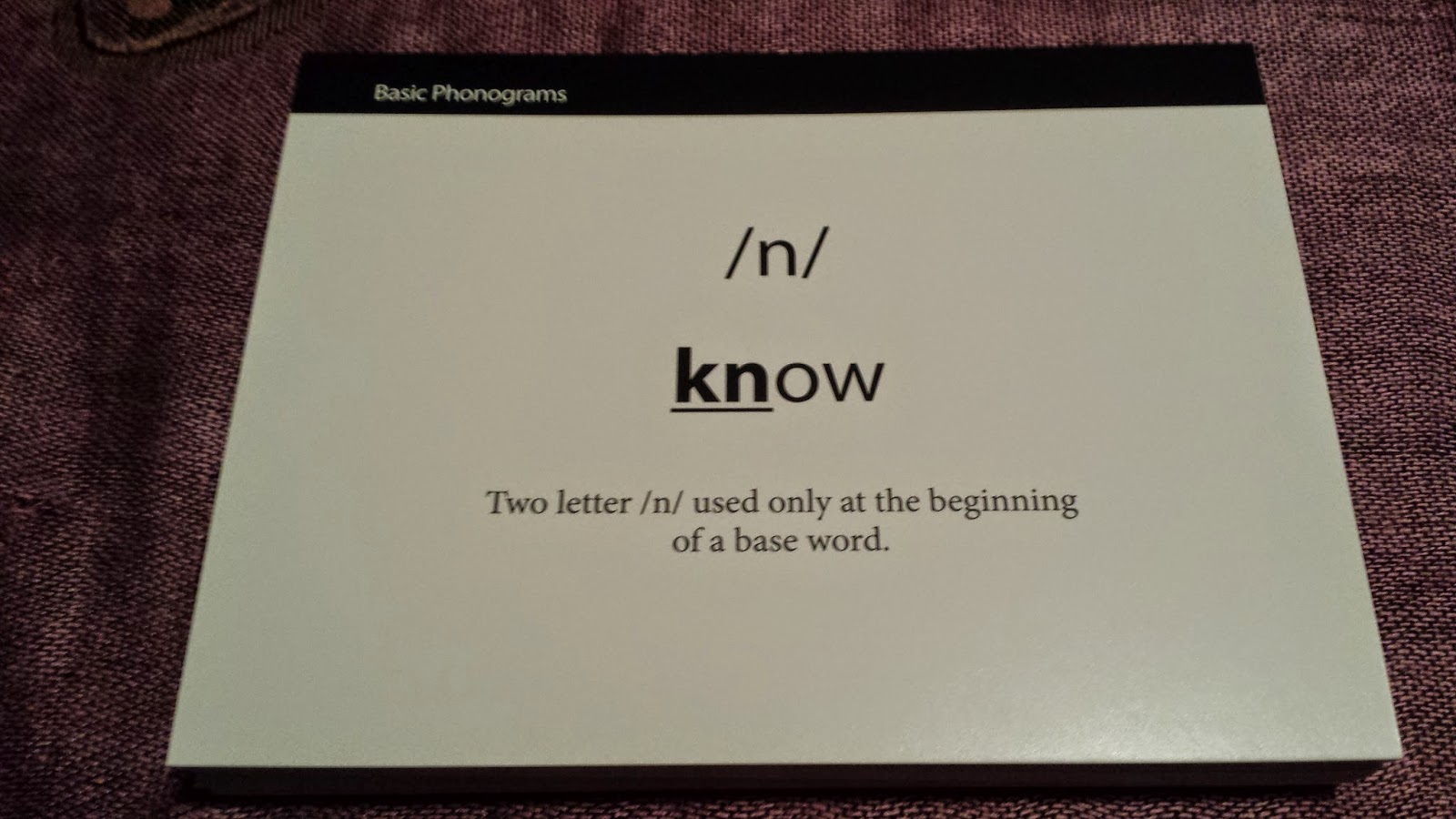
I used the Basic Phonogram Flash Cards to introduce phonograms to my children, as they had only known about letters and a few family word trees previously. We dropped the family tree lessons for now and focused on phonograms, as I did not want them to be stressed out by too many different styles of lessons.


There are notes on the back of the cards with example words and helpful tips to remembering these sounds, though some cards do not have the English word rules.

The whiteboard is extremely sturdy and stain-resistant, compared to the other whiteboards we own. We use Crayola dry-erase markers on the boards and they wipe away easily. Bean was practicing writing some letters earlier in the day. We have put almost all of our letter focus on lowercase letters, because for a while she would only write uppercase letters, even if everything she was looking at was lowercase. It has been a challenge for her to give up writing only in uppercase, but through this program and another that we use, the transition has been gradual but it's much easier for her now.


Some days she will use the phonogram flash cards to practice writing. We typically use this side of the white board with both children. The back side has multiple smaller lines.


Logic of English Review
We read Doodling Dragons by Jim Weiss before we tried out the app of the same name. While there isn't a story line in the book, there didn't need to be. Each letter was accompanied by words that used each of the letters sounds. For example, for letter A the page said "apples and ants," "snakes ate grapes," and "wash the walls," and was accompanied by pictures depicting what the words said. It was quite like Dr. Suess' ABC book, which is why I think my son enjoyed it so much! And even though the page does not say it, we often find ourselves saying "Big G, little g, what begins with g?" and so on with each letter. 
Doodling Dragons was a fun app! My son loved it, just as much as he loved the book. This app focuses on learning the sounds that make up words. The game works on building pre-reading skills by exploring each letter of the alphabet and going through each sound. You could follow up this app with the Phonograms app once your children are more comfortable with letters and phonograms and are ready to begin spelling. The Doodling Dragons App is available for IOS and Android and is recommended for children ages 2-7. 

Logic of English Review
They also have another app available called Phonics with Phonograms that can be used along with the Logic of English products for children and adults. This is a phonics recognition game for reading and spelling that teaches 74 phonograms. This app is available for $2.99.
I cannot say enough how much we enjoyed the Logic of English learning materials that we received. The lessons are all engaging, hands-on and multi-sensory, which is exactly how we like our lessons to be! We look forward to completing each lesson and know that they will be fun and informative. This is a series that I hope to continue using as they move on to the next level!

~ Social Media Pages for Logic of English ~


If you would like to read more reviews on Logic of English by the Schoolhouse Crew, click the banner below.

Click to read Crew Reviews

Crew Disclaimer

Wednesday, May 7, 2014

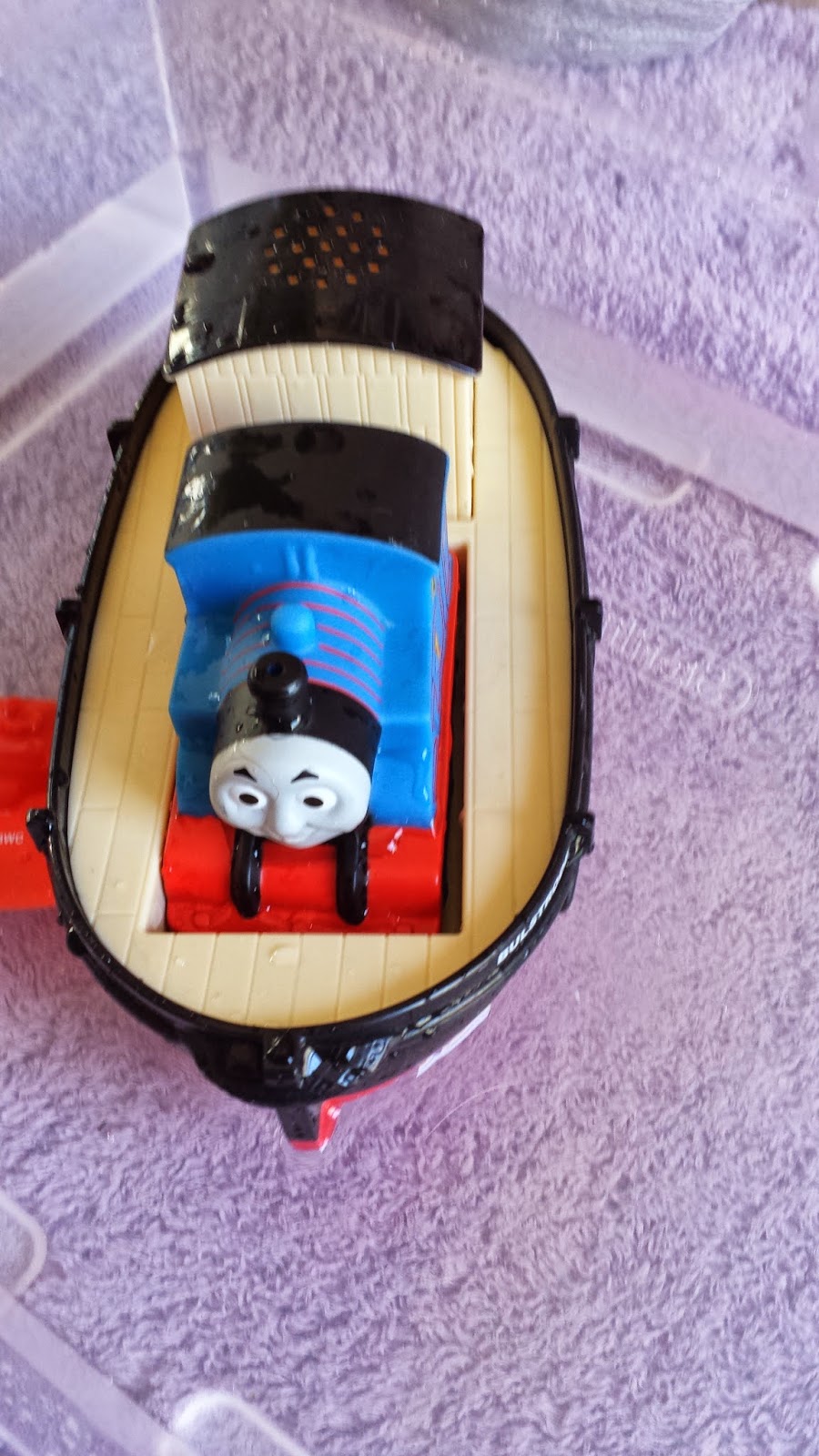
Thomas the Train Sensory Water Play


I've never met a child who doesn't love water play! There's something simple and fun about splashing, scooping and pouring! My children will never turn down an opportunity to play with water! Even as babies they loved it, especially bath time.


Once a week we set up a water themed sensory bin. This week my son picked out his Thomas the Train water toys. Sometimes they keep it simple and pick out scoops and bowls or funnels and cups. Other times they pick magnetic fish to practice fishing or create a underwater world with rocks and water plants and aquatic creatures. Today, it was a few boats and some floating trains.


While playing in the water they discovered which boats and trains floated and sank. Some only sank when they were full of water. We discussed why this was and Bean enjoyed the science behind the simple activity.


Besides that, they loved scooping and pouring and feeling the water filter through the boat's cabin onto their hands.


You'll want to keep a towel under the sensory bin because it's very likely that water will splash out or be poured over the sides. And if your children are like mine, you may even want to use a larger bin because they will be more than happy to climb in and sit in the water!


Be sure to keep a close eye on your toddlers when they are playing in a water filled sensory bin!

If you enjoyed this post, follow along with us on Facebook and Pinterest or subscribe by email or Bloglovin'!

Tuesday, May 6, 2014

Maestro Classics Review

Maestro Classics Review

We had the fantastic opportunity to review two classical music CD's from Maestro Classics and to incorporate them into our homeschool music lessons. We reviewed Mike Mulligan and His Steam Shovel which is based on the classic children's story written by Virginia Lee Burton and The Sorcerer's Apprentice which is a symphonic poem inspired by the poem written by Goethe. Stories in Music provides children with narrated symphony orchestra performances by the London Philharmonic Orchestra. They can be bought in CD or MP3 format and have several other classic titles to choose from, including Casey at the Bat, My Name is Handel, Peter and the Wolf, The Soldier's Tale, Juanita the Spanish Lobster, and The Tortoise and the Hare. My children are familiar with The Tortoise and the Hare from Aesop's Fables, but the other titles we still haven't explored. Other titles that are available on MP3 are Carnival of the Animals and The Story of Swan Lake, which are two of my personal favourites! I would really love to see these titles available on CD! The CD's are priced at $16.98 and the MP3 versions are under $10.00.

Maestro Classics ReviewMaestro Classics Review

The 24-page booklets included with the CD's contain lots of information including biographies, history of the stories, music sheets, songs, activity pages, games and ideas of some activities you can do at home! My kids aren't quite old enough for some of the activities, but we were able to sing the songs and read the sheet music. These pages are downloadable in PDF format when you purchase the MP3 versions. 

Mike Mulligan and His Steam Shovel is recommended for children ages 4+ and families. The Sorcerer's Apprentice is for children ages 6+. I believe children of all ages can benefit from the music, as mine did. Not only would they be listening to a classic story, they would be listening to beautiful music, which is a lesson in itself. My children enjoyed listening to these CD's and have asked to listen to them again and again. 

We specifically chose Mike Mulligan and His Steam Shovel because it was a story I had read as a child and I knew my children would enjoy it. My son is especially fascinated by machinery and really enjoyed the activities we created while we read and listened to this CD. We created Montesorri-inspired 3-Part Cards of steam-powered and diesel-powered machines, including steam shovels. We watched videos of how these machines worked and worked on classifying them. We talked about how these machines helped shape the modern world. We also created a timeline showing when each machine was created (it folds out, so we could have included it in a lapbook if we had wanted). My children's favourite activity was while we listened to Mike Mulligan and His Steam Shovel I set up a sensory bin full of packed dirt with a square outline in the middle and Munchkin and Bean used their construction trucks to dig a square hole for the cellar. It was great to see them practice their fine motor skills while trying to maintain control of the truck and only dig within the lines. After the hole was dug they just enjoyed playing in the sensory bin and added small people to represent the different townsfolk.

Bean loves looking at sheet music and enjoys naming the different notes. We printed out blank music sheets so she could practice copying the notes from the song. She used her own sheet music to play on the piano. Though she has little patience for playing the piano from sheet music, she felt like she was playing her own because she had written them.


We chose The Sorcerer's Apprentice because my son is currently obsessed with Mickey Mouse and recently watched Fantasia. He recognized the story right away and went to find his Mickey the Apprentice doll. We used Mickey as a make-shift puppet and acted out the story. We gathered up lots of buckets (though they were not full of water!) and brooms (because we don't have regular mops) and while Mickey fell asleep after casting his magic, the kids pretended to be the "magic" and spill all the buckets of pretend water all over the floor and the brooms worked on mopping the water up. But eventually the water became too much and they pretended to be swamped by the big waves. It was a fantastic imaginative play activity that they created all on their own while listening to The Sorcerer's Apprentice.


The middle page with the instruments showing what makes up an orchestra is what inspired us to find Montessori 3-Part Cards of instruments (I provide the link below).


We learned about a few key words while listening to The Sorcerer's Apprentice: poem, ballad, stanza, sorcerer and apprentice. We used these as our "words of the week". I taught them what each word meant and Bean practice writing these words on paper and in a salt tray while Munchkin formed the words using letter tiles. For Mike Mulligan and His Steam Shovel we learned: steam shovel, operator, diesel, and boiler. We looked at many pictures of steam-powered and diesel-powered machinery and compared their features. We discussed how these types of machinery evolved over the years as technology became more advanced. Munchkin really enjoyed learning about the different parts of the steam shovel! 


While we do not have the right pots to try out the Kitchen Percussion activity, it would be a great activity to try! I feel like we need to incorporate music more into our homeschool lessons and this would be a fun way to do so!


We picked up Mike Mulligan and His Steam Shovel at our local library and noticed that Virginia Lee Burton had written other similarly themed books: Katy and the Big Snow and Maybelle the Cable Car. While we did not create many activities to go with these other stories, it was still nice to read them.


Bean especially enjoyed reading the book while listening to the music. It was a similar experience to listening to books on tape, except it was accompanied by classical music. It really brought the whole story to life. While reading she pointed out different pictures and told me what was going on. She recognized some of the words on the page and pointed them out to read to me.


Maestro Classics also has some educational materials on their website, including curriculum guides, sheet music, home projects, lapbooks, music appreciation guides and a unit study. I wish they had sheet music available for each of their products, but they only offer sheet music for Peter and the Wolf. It would be nice to see the other ones available so we can print them out and use them for activities.

We spent a week on each CD listening to them and creating a different activity for each day. We really liked them and look forward to learning with other Maestro Classic CD's in the future! It will be interesting to see which CD's they add to their line-up in the future.

Check out Maestro Classics social media pages!


If you'd like to read other reviews written by The Old Schoolhouse crew, click the banner below!

Click to read Crew Reviews

Crew Disclaimer

Monday, May 5, 2014

Ancient Egypt Sensory Bin


Ancient Egypt is so fascinating! I remember when I first learned about Egypt in 3rd grade and we mummified a chicken and gave it to our principle when it was done. It was awesome. Well, we didn't mummify a chicken (we might when the kids are older, who knows!). But we did create a sensory bin to go along with the books on ancient Egypt and Egyptian mythology that we have been reading.


For this activity we used our Safari Ltd. Ancient Egypt Toob. This toob includes: Nefertiti, Bastet, Tutankhamen, Isis, an Amulet, Mummy Case, Scarab, Pyramids, Sphinx, Thoth, Anubis, and a Hieroglyph. We also used a few of our other Toob animals including a cow, mountain lion (because we didn't have an African lioness), crocodile, goose and pig. These animals were to represent some of the other Gods and Goddesses that were not in the Ancient Egypt Toob. (I will go over them later in the post.)


When people think of Egypt, pyramids and the Sphinx are probably the first thing that come to mind. They are enormous and simply beautiful and absolutely capture "Egypt". There is just so much history there! So I knew that was where we had to start. Earlier in the week we created a few different types of pyramids. The first with Lego's, the second with different sized foam cubes, and the third with play dough (I made a ton of play dough cubes and they did the constructing). Each of these methods helped them understand the shape of a pyramid. When they are older we will go over how they are built, but for now we focused on the shape and how to construct a 3-D pyramid. For the Sphinx we created paper-plate lion manes to wear like a mask (the middle was cut out so it was their face with a lion mane), used our Little People lions and play dough to give them new faces and read lots of riddles!


Bean was fully in charge of creating this sensory bin and I let her add all the different pieces and she really enjoyed pouring the corn meal into the bin to create a desert! She was amazed how much the little hills and slopes looked just like a desert. She had to repeat this process many times until the desert was just right.


Image from The Gods and Goddesses of Ancient Egypt by Leonard Everett Fisher

We also used a map from one of the books we were reading as the basis for our Egyptian city. We referenced it many times when we were talking about a particular God or Goddess or myth. We used green and blue glass gems for the Nile river but Munchkin kept removing them, so I told Bean it must mean they were having a drought and she agreed. Set must be happy.

First up, let's meet Tefnut! She is the Goddess of Morning Dew.


Tefnut

This is Tefnut's son, Geb, who is God of the Earth.


Geb and Tefnut

This is Geb's sister and wife, Nut, Goddess of the Sky. She had four children with Geb, named Osiris, Isis, Set and Nephthys. Nut also had another daughter with Ra named Hathor. The story goes that Ra was angry with Nut and cursed her. The curse made her unable to have children on any day of the year. In Ancient Egypt, there were 360 days in a year. Nut knew someone who could help her. Thoth challenged the Moon to a card game and every time he won, he asked for some moonlight. Eventually all this moonlight added up to five days. Now the year was 365 days long and because of these extra few days that were not included in the curse, Nut was able to have a child on each of these days. And because the moon lost so much moonlight, it was no longer able to shine full all the time.

To teach this part of the story, we created a simple card game that had the phases of the moon drawn on them. They each drew cards and played a matching game until five full moons were created. Munchkin sat on my lap and I helped him when he needed my assistance. When they were all matched up, we glued them together and wrote the name of the God or Goddess that was born on that extra day. Bean also wanted to look at the calendar and asked what days they were born on. I told her I didn't know. So I gave her a highlighter to choose which days she thought they might have been born on. I suggested maybe at the end of the year, but she spread out the days over different months.


Nut

This is Set, God of the Desert. He is not a nice guy. Best to just stay away from this guy!


Set

This is gentle Hathor, Goddess of Love. Who once tried to destroy all of mankind. And almost succeeded. (As you can see, after reading this part of the story, Bean made sure to knock everyone down, bellowing, "watch out! Moooo!") Hathor is known for being the Cow Goddess who protected mother and children and as Ra's eye. Other times, when she was doing errands for Ra and punishing people, she took the form of a lioness. But when Ra became old, he feared that his subjects would no longer want him as their king and he wanted to show them he was still powerful.. So he sent Hathor to punish mankind. As a lioness, she was doing a great job until she lost control of her power and Ra had to step in to prevent her from wiping out all of mankind. He had messengers create a sleeping draught that looked like blood and poured it over the fields, and she drank so much that she fell asleep. When she woke up, she was back to her old self and forgot all about destroying mankind.


Hathor

We also learned a lot about Ra - God of All Creation, Isis - Goddess of the Home, Anubis - God of the Dead, Bastet - the cat headed GoddessShu - God of Air, Osiris - God of the Underworld, Nephthys - Goddess of Mourning, Horus - God of Life, Nekhebet - Goddess of Royal Protection and Seshat - Goddess of Wisdom, Knowledge and Writing. We read stories about these Gods and Goddesses, and talked about who their parents were (if they had any), who their siblings were (if they had any), and what they were Gods and Goddesses of. I loved that we had a couple books to go along with this activity because it was fun for the kids to match up the figures to the pictures in the book. 

If you enjoyed this post, follow along with us on Facebook and Pinterest or subscribe by email or Bloglovin'!
Related Posts Plugin for WordPress, Blogger...