Friday, October 9, 2015

Sam the Minuteman Study Guide Review

Progeny Press Review

We received Sam the Minuteman from Progeny Press to review. It is a downloadable study guide that covers everything from vocabulary words to comprehensive questions, with so much in between. The Sam the Minuteman Study Guide is recommended for children in grades 1-3 and consists of 42 pages. The story is a quick read and since Sam the Minuteman is inspired by historical events (still a work of fiction), you can easily add this book and the study guide to a Revolutionary War themed unit study.

After reading Sam the Minuteman (the book does not come with the study guide, you'll have to purchase it or sign it out at the library), we created a small world using our Safari Ltd Revolutionary War figures (both sides). They recreated the scenario of the story, where Sam and his father and their townsfolk have to defend themselves from the approaching Red Coats (or Lobster Backs) who were marching towards Concord and their stash of weapons. We created a map pf Massachusetts using a large brown box, colored road lines and grass, used branches and leaves for trees, rocks with small homes painted on them, and the figures to represent the two groups.

The study guide can be used for both English and history lessons. There are different types of literacy lessons, covering vocabulary words, fill-in-the-blank questions, comprehension questions, word puzzles and more. On the history side, you can create timelines, answer true and false questions, learn about the freedom of American people, journal activities, arts and crafts, and even a homemade butter recipe!

For the questions portion of the lessons we answered at circle time, allowing the kids to work together to discuss the question and take turns answering. We revisited the story whenever we needed, but we were limited to the two weeks we had the book from the library. You'll also find an additional resources section at the back of the study guide that lists other books written by Nathaniel Benchley and books about the colonial times and Revolutionary War era.

Progeny Press Review

We live in Massachusetts and in the neighboring town of Billerica, they have a Yankee Doodle parade every September. We attend every year to watch the parade and visit the Minuteman camps. The members of the Minuteman group dress up in attire appropriate for the time period and shoot their revolutionary era guns (it's just powder, no bullets). We used the parade and Minuteman camps to teach the kids about the life Sam lived.


After the parade we visited their camp to meet the ladies and craftsmen.


They have many displays for teaching how colonialists would have made a fire, cooked a pie in a cast iron cauldron, made candles, broomsticks and even bullets out of melted pewter. They also explain medicine of the day, how to load a gun, how they painted walls, and more. It's only a small group of people who do this, but it's very educational and the kids love it.


You're also able to explore the tents to see what their living quarters might have been like during the war.


We enjoy using Progeny Press for literature based unit studies. The study guides are inexpensive ($11.99) and they cover so much information. Students can easily complete the study guides within a couple weeks. We completed the study guide in just under two weeks.

Be Social!


If you want to read more reviews from the TOS Crew, click on the banner below!

Progeny Press Review

Crew Disclaimer

Tuesday, October 6, 2015

Reading Kingdom Review

Reading Kingdom Review

We received a full year subscription to Reading Kingdom Online for two students from Reading Kingdom. This is an online reading program for kids in Preschool through third grade. Struggling readers, along with children with disabilities, dyslexia, or autism can also benefit from Reading Kingdom as it adapts for your child or student.

We started at an early reader level (recommended age of 4) for my son and daughter. Munchkin has used this program infrequently, since he struggles to keep up with the quick pace (mouse and keyboard are difficult to use at that age - a touch screen would be ideal). Reading Kingdom does offer keyboard and mouse training for those not accustomed to using them. However, Bean has enjoyed using this program as part of her daily reading lesson. She usually uses it for one or two lessons, and then we work on worksheets, early reader books, or flash cards.

The first time you log in, the Reading Kingdom video will show you a tutorial on the site and how it works. It will explain the various features it has to offer and suggestions on how to use the lessons. It advises that parents and teachers allow the students to work on their own and only offer assistance when it comes to moving the mouse (if need be). After the tutorial your student will be asked to complete a placement test to see what level they are at. From there they can begin lessons.

Each lesson lasts a couple minutes. You can pause the lesson for a limited time (up to 12 minutes) or stop the lesson. I personally would prefer an online program that lets us customize how long and how many times a lesson can be paused. In a regular school environment, it makes sense to have a timer limit you, because there are most likely other students who are waiting to use the program. But in a homeschool environment, while we try to work through one lesson at a time with no interruptions, sometimes life gets in the way and you need to take a break for more than 12 minutes, but don't want to have to stop the whole lesson. Either way, we have figured out ways to make it work.


Reading Kingdom focuses on six areas of reading: Phonics (Sounds), Sequencing, Writing, Meaning, Grammar, and Comprehension. 

Here's an example of a problem: click on the letters in the order that they appear, from left to right.


We are still on the Seeing Sequences and Letter Land portion of the program, which is like an introductory course through visual sequencing skills and learning keyboard skills. Once through that, we will begin working on the first level of the reading and writing exercises. There are several "books" covered in each level, usually 5 or 6. Each book covers a handful of words. For example, book one covered: kid, girl, kids, girls, some, a, boys, and more. There is a progress check and review at the end of each section.

We have enjoyed using Reading Kingdom. It has been a great way for Bean to work on her keyboard and mouse skills while working on reading and writing. We look forward to watching her progress through the program over the course of the next few months. I have high hopes that this program is successful for her and gives her a wider foundation of reading comprehension.

Reading Kingdom offers a free 30 day trial, story books, workbooks, and other reading and writing resources that are available for purchase. The online program is available for $19.99 monthly or $199.99 yearly. There is a 25% off discount available for those who signup immediately.

Be Social!


If you'd like to read more reviews from the TOS Crew, click on the banner below!

Reading Kingdom Review

Crew Disclaimer

Wednesday, September 30, 2015

Middlebury Interactive Languages Review

 Middlebury Interactive Languages Review

We received Elementary Spanish 1: Grades K-2 Spanish Courses from Middlebury Interactive Languages to review. Middlebury Interactive Languages has four languages available: Spanish, French, Chinese and German. The courses are designed in age groups: K-2, 3-5, 6-8, 9-12 (with a secondary course in fluency). If you're unsure of what level your child would be in, they have demos available. The first level is available for each grade group and that should always be your starting point if you're just beginning to learn the language you choose. Just a note, the German course is the only course that doesn't offer a K-2 level.

 Middlebury Interactive Languages Review

Since I have a preschooler and Kindergartner, we started with the K-2 course. We have worked through the first few lessons with great success! We focus on one lesson per week, and repeat each section daily. We also printed off homemade flash cards of each word and phrase and each lesson is on a color-coded ring. Both kids have worked on each lesson together (my preschooler is basically at a Kindergarten level in every subject) and it helps that they can work on their language studies by practicing together.

We live in an area where Spanish is commonly spoken. Actually, we more accurately live in a melting pot of cultures and languages, which is amazing. On our street alone we have over eight bi-lingual families that speak English and a native language from their home country. On the flip-side, our neighbors, my kids' best friends, have a Puerto Rican father whose mother only speaks Spanish, and his daughters do not understand her because he never taught them his native language. We suggested trying out Middlebury Interactive Languages, but in the meantime I shared our flash cards with them and printed off some worksheets and my kids and I have helped them practice. It has been wonderful working with a bigger group of kids.

 Middlebury Interactive Languages Review

Proper pronunciation is harder for Bean, who has struggled with speech in the past. We have created phonogram rocks to help with this. We use rocks instead of flash cards for things like this because Munchkin does so much better with objects. The rocks have the letters painted on and there are multiple rocks depending on the accent marks. Once a week we go through the rocks and work on each sound and pair them together to form words she recognizes. During the rest of the week, they are able to play with them however they want. Playing with the rocks is a wonderful way for them to familiarize themselves with the letters and create words to sound out, even if they aren't real words.

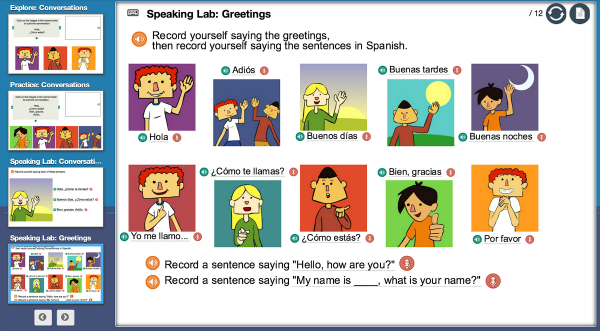
Spanish 1 started with the very basics of Spanish language - Hello, Goodbye, My name is... From there it branched out to incorporate several different areas. We have incorporated our Spanish studies into most of our daily lessons. For math, we use half English and half Spanish word problems (the numbers are Spanish), Bean's spelling words are written in both English and Spanish. She practices to write and read each word. We don't take tests though. We move on when she's ready for a new batch of words. We also have several English/Spanish reading books (top half of page is in English, Spanish translation is at the bottom). We also use workbooks we found at our local bookstore and worksheets we printed out from online. Those we work on together, but my kids primarily use Middlebury Interactive Languages independently on their tablets.


There are 12 units in the K-2 course. Each course has 6 lessons. Each lesson covers different areas, like an introduction to the unit, reviews, exploration, practice, speaking labs, coloring pages, warm-ups, stories, and more. The stories are spoken in Spanish and you listen along and pick up key words from the text that are found in the unit. The units are:

Unit 1: Greetings
Unit 2: Numbers
Unit 3: Family
Unit 4: Colors
Unit 5: School
Unit 6: Review
Unit 7: Body
Unit 8: Animals
Unit 9: Calendar
Unit 10: Food
Unit 11: Descriptions
Unit 12: Review

Each of Middlebury Interactive Languages courses are designed to be completed in one semester (18 weeks/90 days). The joy of online curriculum is that your child can work at their own pace, though the purchase plan limits you to one semester (6 months), with the option to buy an additional semester if needed. There are two purchase plans available, basically with or without a teacher aid. Independent Study costs $119 per semester and with a Teacher costs an additional $175 for a total of $294. If you have multiple students, the price goes up. 

We are enjoying using Middlebury Interactive Languages and as far as online learning goes, the app is really great to use. The kids are able to navigate the site mostly on their own and as the teacher I'm able to keep track of their lessons and grades. The lessons progress at an easy pace for young kids to follow, and each lesson builds on the last. 

Middlebury Interactive Languages is a perfect online program for homeschooling families, especially those trying to teach a foreign language for the first time. Foreign languages can be challenging to teach if you are completely unfamiliar with the language. Workbooks may not be enough to immerse yourself in the language, which is why an online or digital curriculum can compliment your language study. 


To read more lessons from the TOS Crew on Middlebury Interactive Languages, click on the banner below!

 Middlebury Interactive Languages Review

Crew Disclaimer

Monday, September 21, 2015

Heroes of History Review

YWAM Publishing Review

We received Meriwether Lewis: Off the Edge of the Map and Unit Study Curriculum Guide Meriwether Lewis from the Heroes of History series created by YWAM Publishing to review. Both are written by Janet and Geoff Benge, who are also the authors of several other biography books in the Heroes of History series. They combine historical facts into an easy to read literary journey for kids of all ages. Although the suggested reading age for a child reading independently is 10+, we used these books with our kids and I read the chapters and created activities tailored to their grade.

The Heroes of History series is an exciting learning experience that brings kids along on a historical adventure. Each book in the series is based on a real person and true events from their life. In Off the Edge of the Map, readers go on an expedition with Meriwether Lewis across America, alongside William Clark. They were commissioned by President Jefferson to take this journey and left in May of 1804, beginning at the Mississippi River near St. Louis, and ending in September 1806. At the time, no one had completed such a daring exploration of the western states. Their goal was to find a land route the Pacific Ocean. In those days, the United States were divided into groups, including Louisiana (purchased in 1803), Spanish Territory, and what remained of the native regions.


We began reading Off the Edge of the Map near the Merrimack River, a substitute for the Mississippi River, to set the scene. We brought along paper boats (we made them waterproof by folding the paper into a boat, then unfolding it, laminating it, and refolding it - pre-folding it made it so much easier to put back together), small "explorer" figures, a nature journal, map, field guide, and binoculars. We observed nature, tested out the boat on the river, drew berries and flowers in our nature journals then looked them up, marked the map where we started and ended, and went on a walk along the river bank. After our exploration, we sat in a sunny, grassy patch and the kids ate lunch while I began reading. 

Off the Edge of the Map actually starts out by introducing Meriwether's early life and leading up to the journey west. We covered the first few short chapters in one sitting, but after that we read two chapters a day during circle time. After we read we marked spots on the map where they stopped, and we made lists of who they met or what animals and plants they found. I asked them questions about what they learned and found interesting. 


The History Unit Study Curriculum Guide covers Student Explorations, Social Studies, Key Quotes, Community Links, Related Themes to Explore, Bibliography of Related Resources, and Culminating Events. This teacher's guide covers various activities, including: creative writing, drama, movie critiquing, reading comprehension, essay writing, and history and geography concepts. As a teacher or homeschooling parent, you can pick and choose which activities will work best for your child(ren) based on their learning styles. They can also be used individually or as a group. The unit study guide is also designed to be used by children in different grades or abilities. 

We started each reading with a quote, which we wrote on the white board and left up for the day. While we are working on unit studies, we focus on vocabulary words that are commonly used in the passages, such are courage, brave, leadership, etc. These words are used in our daily writing journals (those split notebooks with a drawing portion on top and a written portion below) to inspire a picture and story. Our unit study learning center (or display corner, as it's called in the book) featured a color coded map, where we marked their journey as we read, paper canoes and types of housing (made out of natural materials), Safari Ltd. animal figures (bears, coyotes, beavers, wolves, dogs, eagles, etc), a flower press, plant samples, a compass, timeline, nature journal, field guide, leather and fur (both faux) clothes cut outs that were used to dress up fabric dolls, Lewis and Clark themed flash cards that we found online that featured coins, food, locations, animals, and maps, a picture of the United States flag at the time, printed images of their journals, and books on Lewis and Clark. Most of these were suggested in the unit study guide, and we gathered up what we had available. Our learning center was the main hub for all their hands-on learning needs. They were able to explore together or by themselves, set up small worlds using the figures and natural materials, flip through the flash cards and name what they were, or sit in their reading corner and go through the books. 

We didn't use all of the chapter questions, so we came up with some of our own. Whenever a question asked about the meaning behind a word, they answered what they thought it meant before we looked it up in their student dictionary. We keep a dictionary nearby so they can learn how to look up words. I edited the questions to word them in ways I knew my children would understand. Then I opened the floor for their own questions. Sometimes it would be about Seaman, Lewis' dog, other times it might be "where is the Missouri River?" We then do some research to answer their questions. I allow them to use an iPad so they can ask their questions out loud, instead of having to type them, since they are still working on typing and spelling. There are four comprehensive questions for each chapter. The first covers a vocabulary word from the chapter, the second asks a factual question, the third gauges the students level of comprehension and the fourth is an open-ended question about their opinion or interpretation of the text. 

Our creative writing sessions always include some sort of added art, whether it be a drawing, painting, or craft. If it's a craft, we add it to our exploration table, otherwise it's drawn in their writing journal. We didn't use the essay questions for writing activities, but we did use some of them for oral conversations. Our main focus was the hands-on activities. We created a family crest for Meriwether Lewis' family using a printed blank family crest coloring page and both kids designed them. I showed them examples of family crests (including those for our own family) and explained what different symbols could mean. Bean is really into Knights currently, so this activity was right up her alley. Her crest featured a musket, a canoe and Seaman, Lewis' dog. Munchkin's featured a pine cone and acorn, because he's four and that's what he was more interested in. We created paper canoes that we brought down to our local river and let them sail away (not the laminated ones) while observing them, talking about how the water flow would have determined how fast they moved on the river and how dangerous it would be to paddle around rocky or waterfall areas. We also enjoyed walks through forests, around lakes, and along our local river. 

YWAM Publishing Review
We loved reading Off the Edge of the Map. It was a really interesting way to learn about history and it's perfect for homeschooling families who focus on themes or literature-based learning. We enjoyed researching the places they visited, the people they met, and the animals and plants they found along the way. I would definitely grab the curriculum guide with the book if you plan to use it for a unit study, otherwise I think children who prefer to read and work independently would enjoy reading the book and writing summaries of each chapter. Since there are so many books in the series, it would be really easy to create a history timeline using the books and featuring a historical person for each stop in the timeline of American history. YWAM Publishing offers the books individually, in boxed sets of 5, or the complete collection of 26 books. They also have map books, a Then and Now series, and a biography series for young learners. We will definitely continue using these books for future history lessons! 

Be Social!

Thursday, September 17, 2015

Super Teacher Worksheets Review

Super Teacher Worksheets Review

We received an Individual Membership from Super Teacher Worksheets to review. This is a teacher resource that can be used by public or private school teachers and homeschoolers. It's even an awesome resource for parents and caregivers as well, since there are so many worksheets, activities and games covered on this website. We have been using it for a couple weeks now and I wish I had known about it sooner!

The price of an individual, unlimited access membership is $19.95 per year. Considering how often we use the worksheets and taking into account how much we have already paid for individual worksheets from other websites, this is a more affordable option for us. There are over 10,000 printable worksheets, activities and games available for school teachers and homeschoolers. The worksheets are recommended for elementary aged students (K-5), but there are worksheets available for preschoolers and some older students as well. They add new worksheets every week and they are working on adding more for grades 6-8.

Super Teacher Worksheets Review

Homeschoolers and teachers will be able to find nearly every subject they teach covered by Super Teacher Worksheets. The subjects include: Math, Reading and Writing, Phonics, Grammar, Social Studies, Science and Spelling. There is also a seasonal section that includes worksheets for tons of different holidays, including Halloween and Christmas, and even less known holidays like Dr Seuss Day and Pi Day. So if you are fond of themed mini units about holidays, you are sure to find plenty of worksheets and activities to fill your needs!

The type of worksheets that can be found go beyond traditional worksheets. There are card games, phonics mini-books (a personal favorite of ours), math mystery pictures, dice games, cut-and-glue activities, research projects, memory match games, word wheels, reading comprehension stories and question sheets, book report templates, maps, and more. You can even make your own worksheets for math, spelling, calendars, flash cards, quizzes, and word puzzles using their worksheet generators. Being a member, you can save those worksheets and use them for future activities too!

While Super Teacher Worksheets does not have a huge selection of foreign language worksheets, there are some available for basic French and Spanish. And since we are currently learning Spanish using an online program, it has been so helpful to have these worksheets on hand for writing and reading lessons. There are flash cards, vocabulary worksheets and reading passages available as well. To switch from English to Spanish or French, select the "Lang" option under the description of the worksheet, but keep in mind that it's not available for every worksheet.

Bean working on her "Letter B" worksheets. There are so many worksheets that appeal to her. She loves whenever a worksheet allows her to color as an answer, but she also loves writing in answers! 


But her absolute favorite are the cut and paste spelling worksheets. We love activities that work on fine motor skills, especially when they are fun and educational!


Super Teacher Worksheets Review
One of our favorite printable worksheets is the alphabet mini-book series! We printed off the first 7 for the first month (Bean was already using the first book when I took the pictures). It covers all the vowels (including short and long vowels), as well as all the consonants. I used my rotary cutter to speed up the mini-book-making process and it seriously only took a couple minutes to put them all together. 

Then we stapled them and ta-da! They look awesome! Bean really enjoys using them to practice reading and we are currently considering coloring them in. But for now we are working on mastering them before moving on to the next batch of 7 mini-books!


Super Teacher Worksheets Review

Another favorite type of worksheet are the math ones! Bean prefers worksheets, while Munchkin prefers hands-on math lessons. We were able to finally have him complete a couple math worksheets when I introduced him to the basic addition coloring sheets! It's like paint-by-number with math problems and it's a really fun way to combine math and art!

Super Teacher Worksheets Review

Bean has been obsessed with learning to tell time ever since she was given a wooden toy clock. When I showed her Super Teacher Worksheets collection of "telling time" worksheets, she was over the moon. We have been finding fun ways to combine telling time with storytelling and reading comprehension problems. Like, for instance, if we are working on quarters, I might ask: "Luke went to the bakery at 10:00 am to pick up a loaf of bread. He was having brunch at 11:00 am. He sat in traffic for 45 minutes. How early was he?" And then she would draw the hour and minute hands on a laminated clock or write in the time. There are a bunch of worksheets that already feature a specific time as the answer, so we try to use those and just create stories to go along with them. She loves the problem solving aspect of it!

Super Teacher Worksheets Review

We have only started to use the reading comprehension worksheets, but already they are enjoying them. Typically we use them for oral lessons or I write in their answer, since we aren't up to writing complete sentences yet.

The science section has a ton of great worksheets that we use for mini unit-studies. They cover animals, anatomy, life cycles, electricity, matter, simple machines, space, weather and more! You can print out a weather chart to track the weather outside. You can go on a solar system scavenger hunt. You can even create and play a simple machines board game.

There are just so many worksheets available to choose from. I doubt we will ever get to them all (because there are over 10,000 worksheets!), but I love having that many options! We highly recommend Super Teacher Worksheets to teachers and homeschoolers, because not only is it affordable, but it is a seriously wonderful resource to have on hand!

Be Social!


To read more reviews on Super Teacher Worksheets from the TOS Crew, click the banner below!

Super Teacher Worksheets Review

Crew Disclaimer

Thursday, August 20, 2015

Horizons Kindergarten Math Set Review


Alpha Omega Review
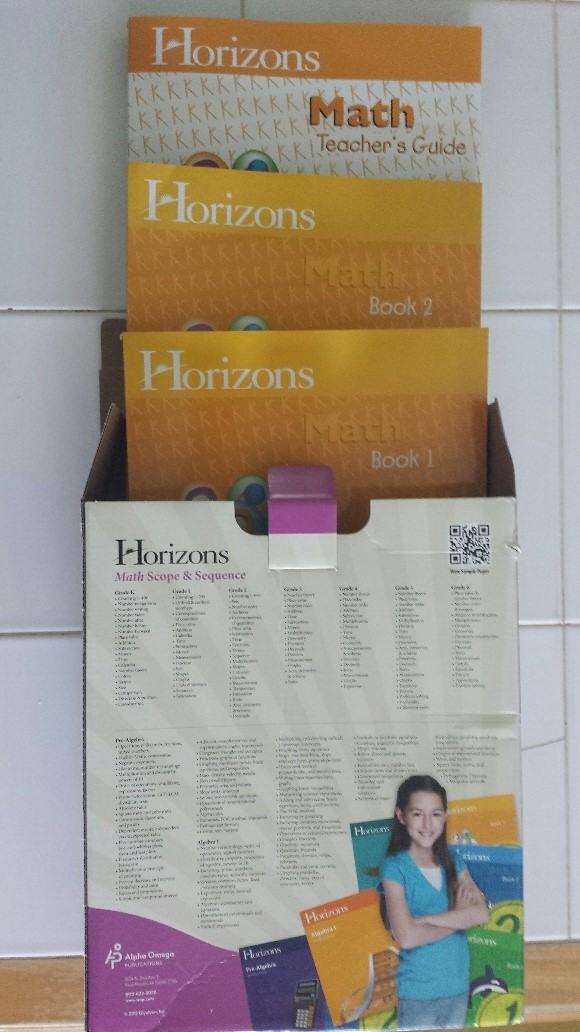
We received the Horizons Kindergarten Math Set from Alpha Omega Publications to review. This is a full curriculum for homeschooled Kindergarten children. The set comes with two student workbooks and a teacher's guide. You'll also want to have basic math tools and materials on hand for many of the lessons.

The scope and sequence of this curriculum is: counting 1-100, number recognition, number writing, number value, number after, number between, place value, addition, subtraction, money, time, calendar, number theory, colors, shapes, size, comparison, direction and position, and coordination.

The lessons are teacher-led. The teacher's guide is straight-forward and allows for you to add your own teaching style to fit the learning needs of your child. Inside the teacher's guide you'll find daily lesson plans and answer keys, along with teaching tips and activities. There will also be a materials and supplies list which make it easy to gather materials to use for the lesson. I find the lessons to be multi-sensory friendly, which is helpful when teaching children with different learning styles. I typically lead math lessons by setting up the worksheets with any physical materials needed and verbally go over the lesson and the solution. Then you can either work with the student or let them work independently. We're very hands-on, so problem solving is a group effort and I love watching my kids work together.

One feature that we love about this curriculum is that the workbooks are full of color! You rarely see colored illustrations in a math workbook (or perhaps we have just been buying all the wrong ones). It's the small things that count and since my children have always reacted better to work pages that are colorful, it made a huge difference. Both of my children enjoy math, so while my daughter worked on the problems, I set up similar activities for my son to work on. 

Here are a few examples of the worksheets from the first few lessons. Some pages simply ask you to count the objects, not to write them, but Bean decided to write them anyway.


There are plenty of opportunities to practice verbally counting and practice writing numbers.


Counting specific objects instead of dots on a chart makes it so much easier for the kids to keep track of where they are while counting. They remember where they left off if they pause while counting, and are more confident while counting out loud. They love declaring that there are "five ducks!" or "eight fish!"


Here's a comparison of the student workbook to the teacher's guide. What isn't covered in the student's workbook are the hands-on lessons, which are thoroughly explained in the teacher's guide. The student workbook only covers the written portions of the lessons.


One unexpected resource that we didn't originally intend to use is the box that the curriculum comes in. The box is large enough to fit another set of the books inside and seemed like a bit of a waste of space. So when we opened it up, the books were moved to our math shelf and the box sat next to the indoor recycle bin for a couple days. After using the books for a few days, we realized there were a handful of materials that we always reached for when we started up the math lessons each morning. So I filled up the box and all of our extra materials fit inside! Inside the box is: dry-erase boards and markers, laminated number boards (1-10, 1-20, 1-100, and skip-counting 2, 5, 10, etc.), shape blocks, pattern cards, plastic counters, play money, ruler and measuring tape, clock, math magnets and small magnet board, calendar, compass, and flash cards. We also have a set of dominoes that doesn't fit in the box, but that we use often.

You could absolutely use this curriculum without physical materials, but we really like to follow up worksheets with hands-on activities. Plus, this curriculum is primarily used by my daughter (she does all the written parts), but my son still sits with us and follows along with the lesson. He is technically a year behind, so he doesn't usually use worksheets. But he loves hands-on math. So we set up the same sort of problem for him, but instead of using the worksheet, he uses the physical materials. As a kinesthetic learner, this is how he learns best. My daughter on the other hand favors visual and auditory learning, so she prefers worksheets and spoken lessons.

We loved using Horizons curriculum for math. I look forward to continuing to use their curriculum for this upcoming year! Both of my kids enjoyed using this curriculum. Bean was overjoyed to have a "huge math book!" to use for lessons and is always excited to sit down and start on the next lesson. We would highly recommend Horizons math curriculum to other homeschooling families. We all find the lessons to be engaging and fun!

The Horizons Kindergarten Math Set is available for $71.95.

Social Media:

Facebook: https://www.facebook.com/aophomeschooling
Google Plus: https://plus.google.com/+Aophomeschooling/posts
Twitter: https://twitter.com/homeschoolers/
Pinterest: https://www.pinterest.com/aophomeschool/
Instagram: https://instagram.com/aophomeschooling/

To read more reviews on Alpha Omega Publications products, click the banner below!

Alpha Omega Review

Crew Disclaimer

Tuesday, August 4, 2015

Funtastic Unit Studies Review

Funtastic Unit Studies Review
We received Science Unit Studies For Homeschoolers and Teachers from Funtastic Unit Studies to review. This curriculum was designed by Susan Kilbride, a homeschooler, with other homeschoolers in mind, but can still be used in a classroom or even as after-school activities for public school children. While it's not a full science curriculum, it can absolutely be used for stand-alone unit studies or used by teachers for learning activities to supplement their own curriculum. 
An awesome benefit of this science curriculum is that it utilizes multi-sensory styles of learning and mixes hands-on lessons with vocal or written lessons. The units build on each other, so we started at the beginning. We have been 
There are 20 chapters in this book, covering material from the five senses and dinosaurs, to microscopes and simple machines. They are grouped into two categories, which is based on an age group, either 4-7 or 8-13. My children fall in the first category, so we primarily focused on those activities. The idea is to start at the beginning of the book and work your way through the activities. However, considering our children won't be ready for chapters 11-20 for some time, we have only looked through them to see what we have to look forward to. Homeschooling families with a broader age range of children (ex: 4, 6, 8 and 10) will likely not run into the same problem. I expect that they would either figure out a way to make each chapter useful to all their children, or simply run two science units.

At the start of each unit you'll find a materials list which is based off of the needs of an individual student. So if you are teaching more, you'll need to multiply the list appropriately. Most of the items are common and can be found around the house, bought at a local store (grocery, hardware, etc.) or at a library. Each chapter has roughly 4-7 parts, Some parts feature multiple activities, while others consist of single comprehensive activities, tests, and crafts. The tests can be found at the end of the 8-13 units to check if the student understands the unit and is ready to move on. Each of the units are designed to build on the unit that came before it.

Typically, a unit of this size can be completed in a week or two, depending on the pace of your child. You may even want to create a month long unit for younger children and supplement the unit with your own activities. Or you could simply work on one part per week, depending on how often you teach science in your homeschool. We typically work on science Monday, Wednesday and Friday, with breaks in-between to read books on the subject. Monday is the introductory day, Wednesday is the hands-on learning and exploration activities day, and Friday is the "experiment" day. We visit the library on Saturdays to pick out books for the next week.

Both kids loved the first unit on the Five Senses. We followed the activities in the book and ditched our regular science routine to feature one of the five senses each day. In addition to the activities in the book, we created a few of our own, for the kids to work on while I set up the activities for the day. Like coloring with scented markers, reading books on the five senses or books that feature one of the five senses (touchy-feely books, scratch and sniff books, etc.), and listening to music.

We also set up exploration tables that we left up all week that focused on the current theme. So for example, we started at the beginning of the book with the five senses. We used a couple small bowls we had and filled them with items that represented the five senses. For scent, we used our homemade scent bottles, which are old spice containers, cleaned out and painted, and filled with different herbs and flowers and oils, so that they can test them out and guess what the scent it. For the touch basket we used fabrics with different textures, wood toys that are smooth and bumpy, shells of various shapes, and texture blocks that have different patterns on each side. For taste we used dried fruits, nuts, and small snacks, like veggie sticks. The five types of tastes are: sweet, salty, bitter, sour and savory. We added something for each of these tastes. We kept them in baggies, but they were allowed to snack on them and match them to the five taste words of what they think they are. For sight we added small binoculars, a magnifying glass, a hand mirror and a kaleidoscope. For sound we created sound eggs, using old Easter eggs and filled them with different objects, like a bouncy ball, dried beans, bells, beads, sand, sticks, etc. There are a dozen of them and they try to line them up from the quietest egg to the loudest egg, or vice versa.

The Human Body unit (the second unit) was Bean's favorite unit so far. She especially enjoyed creating a human body out of construction paper over the course of  the week. Typically unit studies would last two weeks, but because it's the summer time and we have multiple mini-vacations, we try to keep our schedule open. For this lesson, we took some of the activities outside. We used our local basketball court to trace our bodies and draw features and different parts of the body. Munchkin used printables of the human body that he colored in. Our exploration table featured a human body model, skeleton toys, books, and paper and pencils to draw parts of the human body.

Now we are on the prehistoric unit which focuses on dinosaurs and has so far been a huge hit with Munchkin. He loved making the bagel Stegosaurus (although he munched on it the whole way through). We used our dinosaur toys to sort herbivores, carnivores and omnivores. Our exploration table had multiple sets of dinosaur flash cards, books, a small sand garden with dinosaur skulls and bones ("fossils") to excavate, and a sensory bin small world with grass, rocks and dinosaur figures to play with. We also used the Magic School Bus In the Time of the Dinosaurs book with a timeline to explore the different time periods. We watched the Disney movie Dinosaur and some Land Before Time movies to show what life was like for dinosaurs. They already watch the Dinosaur Train show, so they knew a lot about dinosaurs. We're currently exploring their extinction and it's pretty sad for Munchkin, so we picked up the book Dinosaur Cousins? at the library to cheer him up. He now sees dinosaurs everywhere.

Personally, we loved this book! It was easy to understand, the activities took little to no time to set up (though some did require trips to the store for supplies at the beginning of the week), and both kids enjoyed them. We actually took a step back from full lessons for a couple weeks over the summer, but these helped up get back into the swing of homeschooling through the rest of the year.

Science Unit Studies for Homeschoolers and Teachers is available for $24.95 (old edition) or $16.95 (new edition). There are two free PDF units that you can download to determine if this book is right for your homeschool or classroom. You can also find other freebies, lessons and activities on Susan's website.

For more reviews on Funtastic Unit Studies, click on the banner below!

Funtastic Unit Studies Review

Crew Disclaimer
Related Posts Plugin for WordPress, Blogger...